
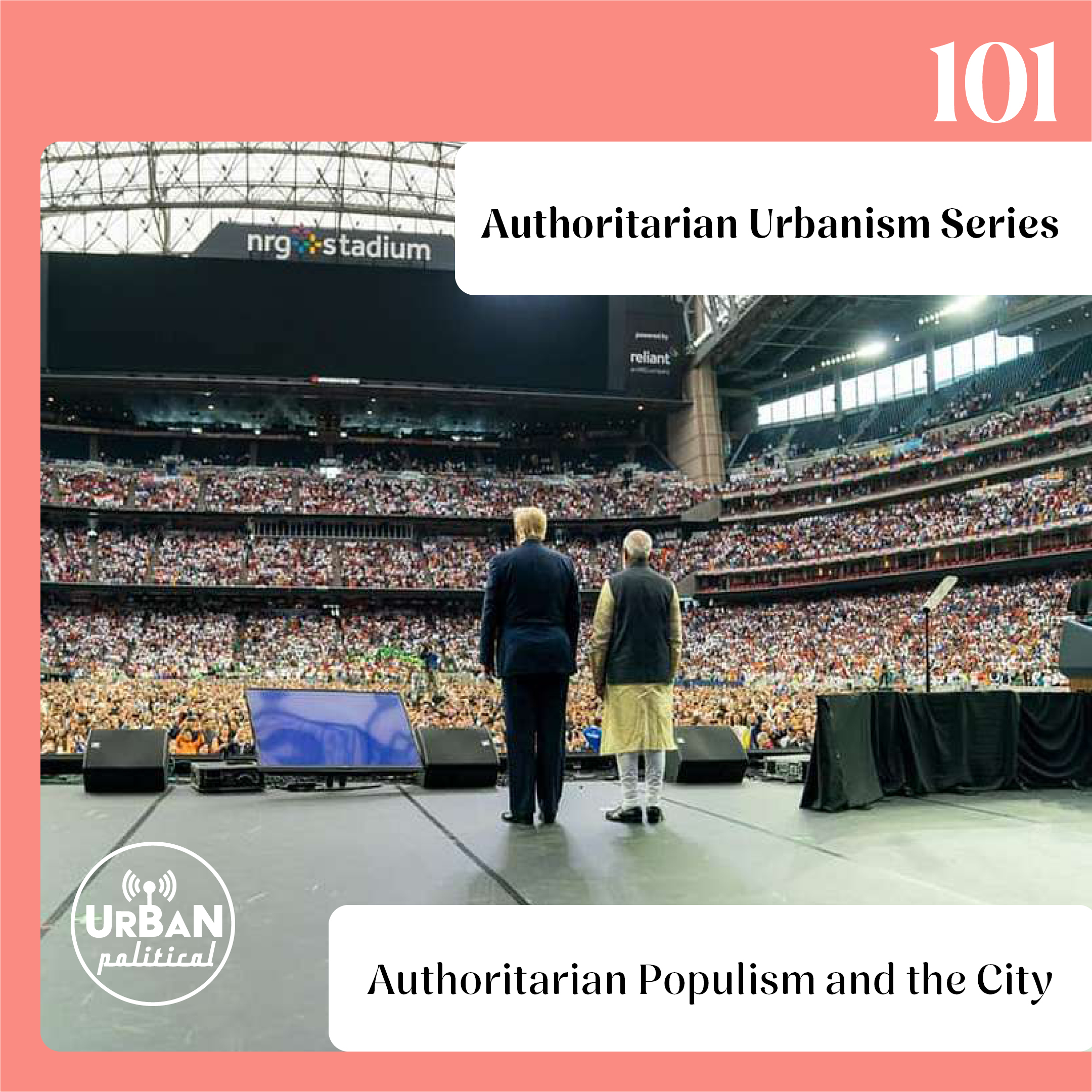
Authoritarian Urbanism Series
Across the world, a rightward populist turn is reshaping politics, everyday life, and the spaces we inhabit. This series examines the rise of authoritarian urbanism born from the convergence of state power, militarised violence, infrastructure-led development, and racialised and religious nationalism. As neoliberalism faces a crisis of legitimacy, these forces work to consolidate control and drive new waves of urbanisation that deepen social polarisation. Alongside these authoritarian transformations, we trace the everyday democratic practices—subtle acts, collective refusals, and imaginative alternatives—that contest authoritarian rule and open space for different urban futures. Through conversations with researchers, activists, and practitioners, the series takes stock of this authoritarian conjuncture and asks how power, urbanisation, and resistance intersect in shaping our worlds.
As the first part of our mini-series, this episode focuses on the turn towards an ‘authoritarian populism’ as means of securing and extending neoliberal urban policy, and the extent to which a new political formation is being formed through popular contestation in and over urban space. The episodes discusses research on the USA, India, Brazil and the UK to identify both commonalities and differences across how authoritarian leaders mark out new enemies of the nation, extend police powers over the city, and how populist positioning serves to secure the interests of real-estate developers. We suggest that this authoritarian turn may even take us beyond neoliberalism towards an urbanism that is both illiberal in its politics and development model.
The episode is hosted by Gareth Fearn with guests Natalie Koch, Malini Ranganathan and Leonardo Fontes. This episode is one of a three-part series which cover different aspects of ‘authoritarian neoliberal urbanism’, based on a special issue in the Urban Studies Journal edited by Guldem Ozatagan, Gareth Fearn and Ayda Eraydin.
Guests:

Natalie Koch
Natalie Koch is Professor of Geography at Syracuse University’s Maxwell School of Citizenship and Public Affairs. She is a political geographer who works on geopolitics, authoritarianism, identity politics, and state power, primarily in the Arabian Peninsula. In addition to her monographs Arid Empire [versobooks.com](Verso, 2022) and The geopolitics of spectacle [cornellpress.cornell.edu] (Cornell University Press, 2018), she is editor of editing several collections, including Spatializing Authoritarianism [press.syr.edu](Syracuse University Press, 2022).
Something else to share is to an Academia.edu link for free access to the chapter I mentioned:
This is also OA and was the starting point for her intro to the Spatializing Authoritarianism book: https://acme-journal.org/index.php/acme/article/view/1811 [acme-journal.org]

Malini Ranganathan
Malini Ranganathan is Associate Professor in the Department of Environment, Development, and Health at the School of International Service at American University, Washington, D.C, and a fellow at the Climate and Community Institute, a progressive climate and economics think-tank.
She is an urban geographer and an engaged environmental justice researcher, writer, and activist who works in collaboration with labor unions and grassroots movements in India, primarily in the city of Bangalore. She is the co-author of Corruption Plots: Stories, Ethics, and Publics of the Late Capitalist City (Cornell Press), winner of the 2024 Leeds Prize for best book in critical urban anthropology.
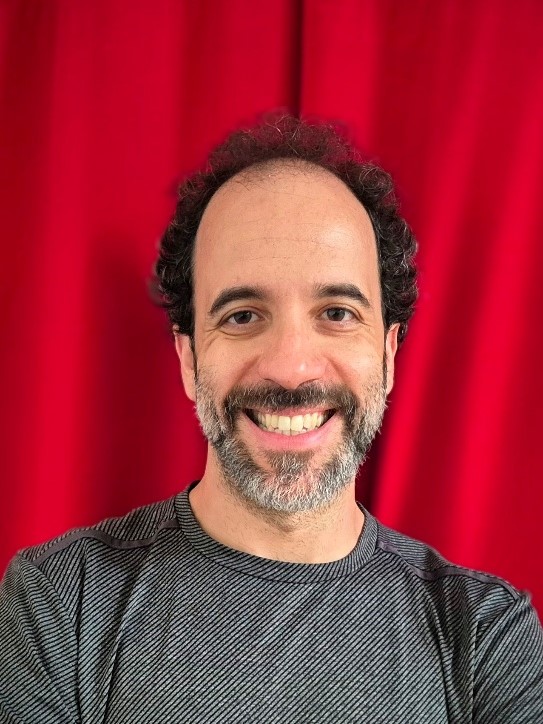
Leonardo Fontes
Leonardo Fontes is a professor in the Department of Sociology at the State University of Campinas (Unicamp) and a researcher at the Center for Urban Ethnography at the Brazilian Center for Analysis and Planning (Cebrap). His research has focused on analyzing social and political dynamics in urban peripheries, especially in the city of São Paulo.
In recent years, he has worked on topics such as social mobility, community relations, and entrepreneurship among the working poor. His most recent works include BETWEEN DREAMS AND SURVIVAL: The (Dis)Embeddedness of Neoliberalism among Entrepreneurial Workers from São Paulo’s Peripheries (https://onlinelibrary.wiley.com/doi/abs/10.1111/1468-2427.13218 [onlinelibrary.wiley.com]); Autocratization and Social Innovations: Reimagining Democracy in Brazil’s Urban Peripheries (https://read.dukeupress.edu/nps/article-abstract/46/4/420/397945/Autocratization-and-Social-Innovations-Reimagining [read.dukeupress.edu]) and Informality, precariousness, and entrepreneurialism new and old issues of urban labor in Latin America over the last decade (2012–2021) (https://bibanpocs.emnuvens.com.br/revista/article/view/642 [bibanpocs.emnuvens.com.br]).
Host:

Gareth Fearn
Gareth Fearn is currently a Leverhulme Early Career Fellow at the University of Manchester, UK.
His research analyses energy, housing and planning by combining approaches from Political Economy and Geography.
He is the co-editor (with Güldem Özatağan & Ayda Eraydin) of a recent special issue for Urban Studies on ‘Authoritarian Neoliberal Urbanism’.
His current project focuses on the British electricity system and the energy crisis.
A full list of his papers, writing and podcasts are available at: https://garethfearn.com/