
Across Europe, local states are in a dire predicament, experiencing the consequences of austerity cuts, shortage of staff as well as a lack of trust in (local) government.
Overlapping crises such as climate change, military conflicts and displacement, precarious provisions of public services, the production of so-called left-behind spaces and the rise of the far right pose severe challenges to its institutions – on various scales and across a wide range of sectors. This situation has sparked seemingly paradoxical developments. In some contexts, it has evoked the loss of legitimacy of democratic institutions and authoritarian takeover, while in other cases the local state is becoming an arena for progressive statecraft tailored at social justice and sustainability.
Much is being written on these authoritarian and progressive tendencies. In two episodes on the transformation of the local state, we want to complicate binary thinking that can be quick to romanticise progressive local institutions or paint a homogenous picture of authoritarian situations. Paying close attention to the intricacies of the local state, we want to draw attention to its inherent contradictions and frictions by asking: How does progressivism and authoritarianism play out in the everyday processes of the local state? What are the grey spaces where they might overlap and even coproduce each other? What power relations shape these processes?
Both episodes are hosted by Matthias Naumann and Gala Nettelbladt. In the first episode, moderated by Ross Beveridge, we discuss authoritarian developments in local statehood with Harriet Dunn, Crispian Fuller and Theo Temple.
Guests:
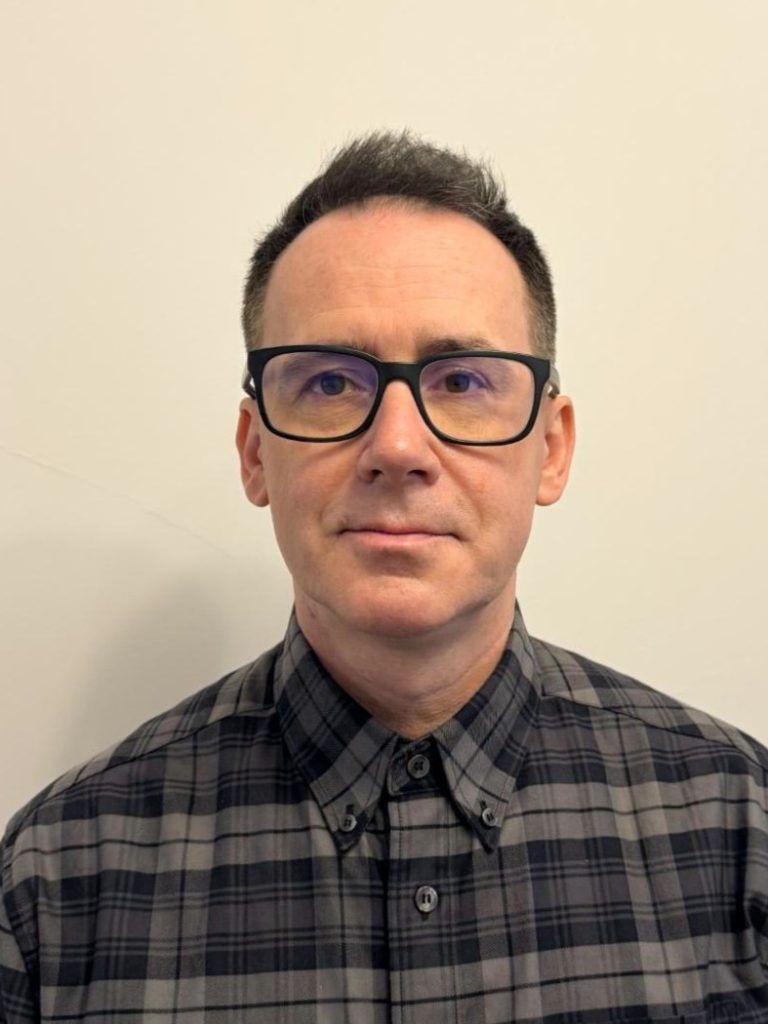
Crispian Fuller
Crispian Fuller is a professor of economic geography at the School of Geography and Planning, Cardiff University. His research focuses on the everyday politics, practices and power relations of urban governance, particularly in relation to urban local government. His work explores how the urban local state manages and mediates nation state programs, particularly in relation to the heterogeneous governance constituting urban areas. Crispian has extensively published on the impacts and mediation of austerity by the urban state in the UK, particularly in relation to economic development and regeneration. Whilst set within political economy approaches, his research engages Boltanski’s Pragmatic Sociology of Critique, Schatzki’s practice theory and Honneth’s recognition theory.
Crispian currently serves as the principal investigator on a Leverhulme Trust-funded project investigating local government Council Tax debt collection practices. This research analyses metropolitan councils across England manage debt collection and the impacts of such practices on citizens.
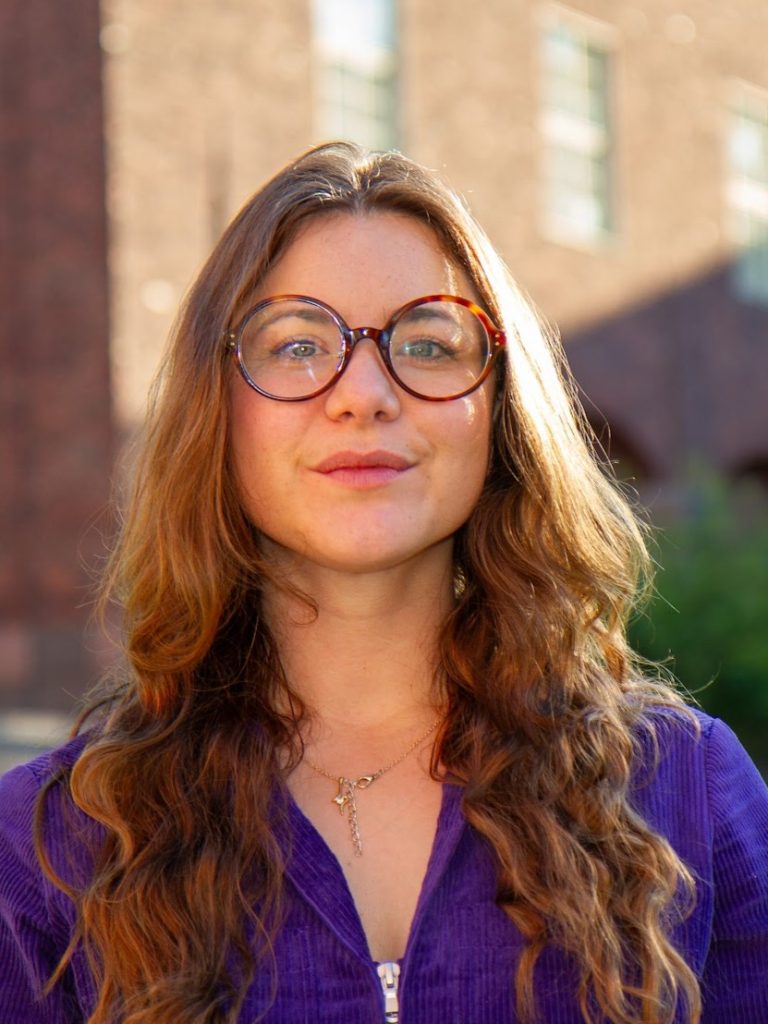
Harriet Dunn
Harriet Dunn is a doctoral researcher in urban and regional planning at the Royal Institute of Technology (KTH) in Stockholm, Sweden. Her research explores the political and institutional dynamics shaping contemporary planning practice, with a particular focus on multi-scalar governance, organisational structures, and policy processes. Her PhD focusses on the rationales and mechanisms underpinning the deployment of territorial contracts at the intersection of transport and land-use planning in Sweden.
Most recently, Harriet has been exploring the relationship between ideology and planning in the Swedish context. In particular, she is interested in the way in which contemporary populist reactionism is (re)shaping the local state as a governing institution. Harriet has previously published research in Planning Theory and Practice concerning localist manifestations of discontent and changing planning values: https://doi.org/10.1080/14649357.2024.2437987
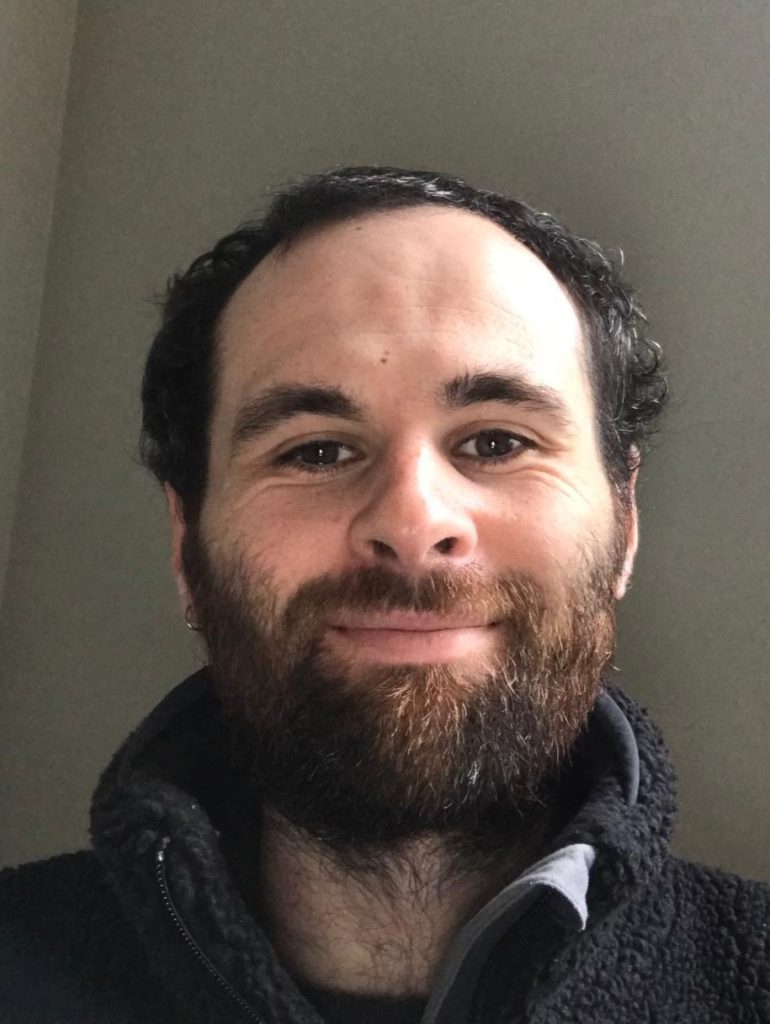
Theo Temple
Theo Temple is a postdoctoral researcher at Cardiff University, School of Geography and Planning. He is currently part of the Leverhulme funded ‘City Governments Citizen Public Sector Debts and Debt Collection’ project, investigating the practices, politics and impacts of Council Tax arrears and enforcement in the context of UK austerity. Theo’s doctoral research was concerned with the political geographies of property tax relief in urban Brazil, exploring the relationship between legal norms and exception within state finance. Theo’s research is concerned with the local state, empirical themes within fiscal and financial geography and broader conceptual debates around spatial grammars, conjunctural analysis and biopolitical theorising.
Hosts:
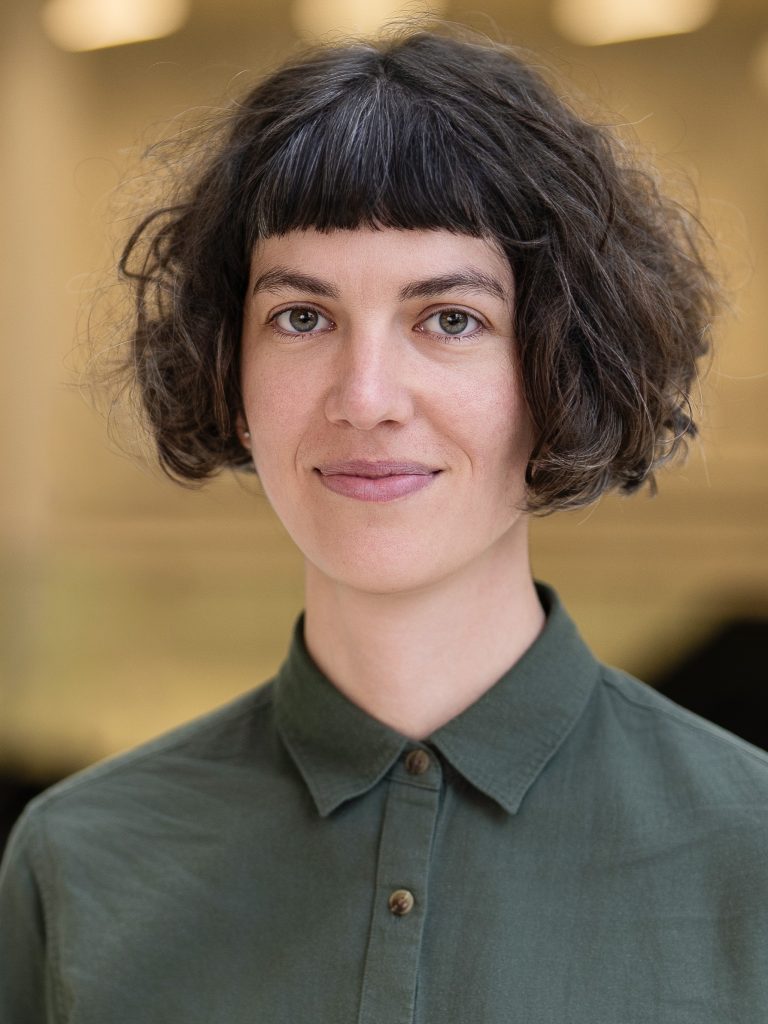
Gala Nettelbladt
Gala Nettelbladt is an interdisciplinary urban and planning scholar, postdoctoral researcher and lecturer at the Institute for European Urban Studies, Bauhaus University Weimar. She is also an associate member of the DFG-funded Research Training Group Urban Future-Making at HafenCity University Hamburg ( https://urban-future-making.hcu-hamburg.de/people/dr-gala-nettelbladt).
With a double background in social sciences and urban planning, her research broadly centres on socio-political conflicts and negotiations in cities, critically examining the role of civil society, planning and state authorities in navigating today’s multiple crises, such as the rise of the far right and climate change. This has included work on local counterstrategies against far-right contestations (https://www.tandfonline.com/doi/full/10.1080/21622671.2023.2209126  ) and urban governance amid depleting water availabilities in Germany’s Lusatia region: https://journals.sagepub.com/doi/10.1177/00420980251379335 .
Photo Credits: Oliver Reetz
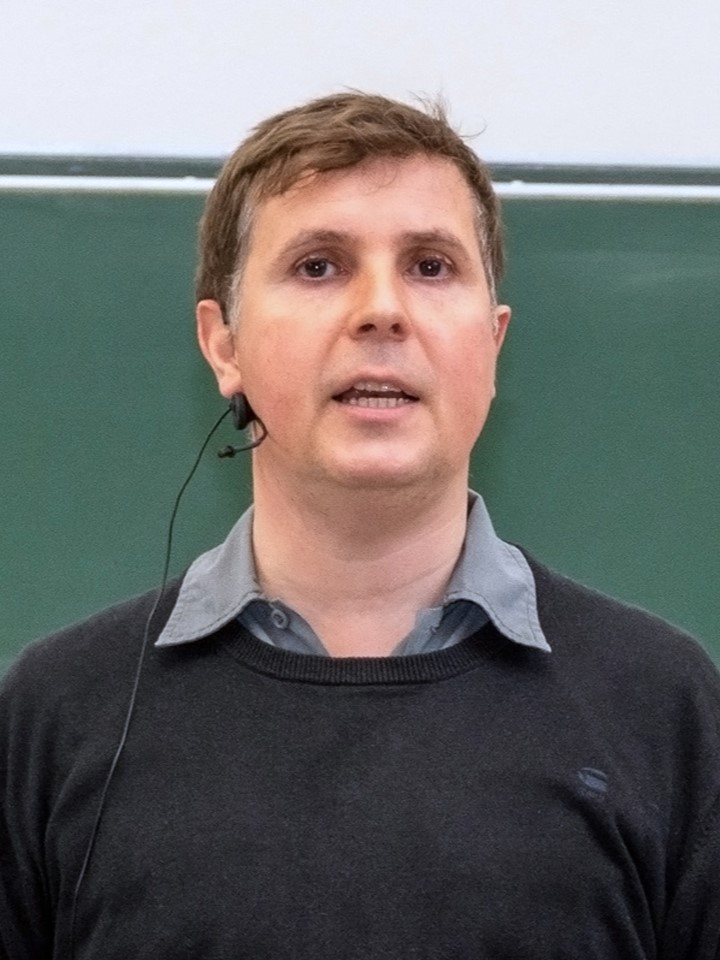
Matthias Naumann
Matthias Naumann is a professor of human geography at the University of Würzburg, Germany. He works on transformations of infrastructure, urban and rural development with a focus on political geographies of authoritarian as well as progressive movements. Recently, Matthias and colleagues published on the neoliberal governance, regional embitterment and the rise of the far right (https://doi.org/10.1080/21622671.2025.2518312 ). Other contributions include collaborative work on ”infrastructural populism” (https://doi.org/10.1111%2Fgec3.12738) and progressive urbanism in small towns (https://doi.org/10.1177/10780874211055834 ).
Moderator:
Ross Beveridge
Ross is a Senior Lecturer in Urban Studies at the University of Glasgow working in the field of urban politics and governance. His most recent book is How Cities Can Transform Democracy, co-authored with Philippe Koch (ZHAW Zurich) and published with Polity Press in 2022.
He is a member of the editorial board of the journal Geography Compass and is co-founder and editor of the Urban Political Podcast.