
While the first episode on the transformations of the local state (episode 104) focussed on current authoritarian takeover in different European contexts, this episode will zoom into the progressive possibilities of local state transformations. The episode discusses institutional changes within the local state, the role of other political actors and geographical scales as well as the limitations of localist solutions.
The episode is moderated by Matthias Naumann and Gala Nettelbladt, with contributions from Anil Sindhwani, Anke Strüver and Enikö Zöller.
Guests:
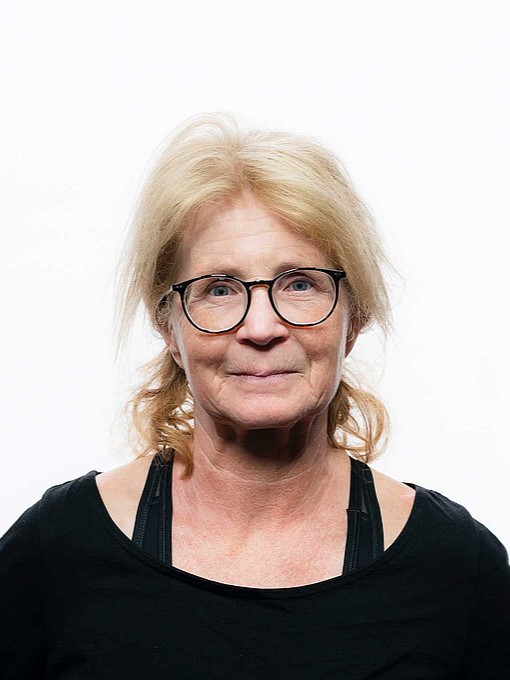
Anke Strüver
Anke Strüver is professor of social and urban geography at the University of Graz, Austria. Her research focuses on embodied sociospatial relations in urban everyday life, especially along the themes of health, food and active mobility – always integrating feminist issues of precarious human interdependencies as cross-sectional theme and increasingly applying collaborative research methods. Recently she has co-edited a special issue on “Public Urban Cultures of Care” for “Urban Planning” (Vol. 10), see https://www.cogitatiopress.com/urbanplanning/issue/view/428.
Photo: University of Graz

Anil Sindhwani
Anil Sindhwani is an urban and political geographer, focusing on housing politics in London. He is currently a Ph.D. Candidate in Geography at Durham University, and is funded by Economic and Social Research Council funded NINE Doctoral Training Partnership. Anil’s research explores the local state, local party politics, state-led displacement, and housing development in Tottenham, London. His research uses a variety of qualitative methods, as well as considers historical and contemporary social movements. Anil has also worked at the New York City Housing Authority and is a housing campaigner in London. His most recent work considers accommodative activism in Thatcher’s Britain, focusing on the campaigning of a group of public housing residents in Tottenham.

Enikő Charlotte Zöller
Enikő Charlotte Zöller is a PhD Candidate in the DFG Research Training Group ‘Societal Transformation and Spatial Materialization of Housing’ at Bauhaus-Universität Weimar, Germany. She previously studied Urban Governance, Policy and Planning at Sciences Po Paris. Her doctoral research examines how pronatalist housing policies in Hungary produce and reproduce spatial orders, familial norms, and subject positions through the interplay of subject, space, and social order in rural and suburban contexts. In this podcast, she discusses the local state in Hungary, with particular attention to centralisation, municipal autonomy, and scalar tensions within and across the local state, the central state, and the EU. A related paper (in German, 2022) is available here: https://doi.org/10.36900/suburban.v11i3/4.874. 
Hosts:

Gala Nettelbladt
Gala Nettelbladt is an interdisciplinary urban and planning scholar, postdoctoral researcher and lecturer at the Institute for European Urban Studies, Bauhaus University Weimar. She is also an associate member of the DFG-funded Research Training Group Urban Future-Making at HafenCity University Hamburg ( https://urban-future-making.hcu-hamburg.de/people/dr-gala-nettelbladt).
With a double background in social sciences and urban planning, her research broadly centres on socio-political conflicts and negotiations in cities, critically examining the role of civil society, planning and state authorities in navigating today’s multiple crises, such as the rise of the far right and climate change. This has included work on local counterstrategies against far-right contestations (https://www.tandfonline.com/doi/full/10.1080/21622671.2023.2209126  ) and urban governance amid depleting water availabilities in Germany’s Lusatia region: https://journals.sagepub.com/doi/10.1177/00420980251379335 .
Photo Credits: Oliver Reetz
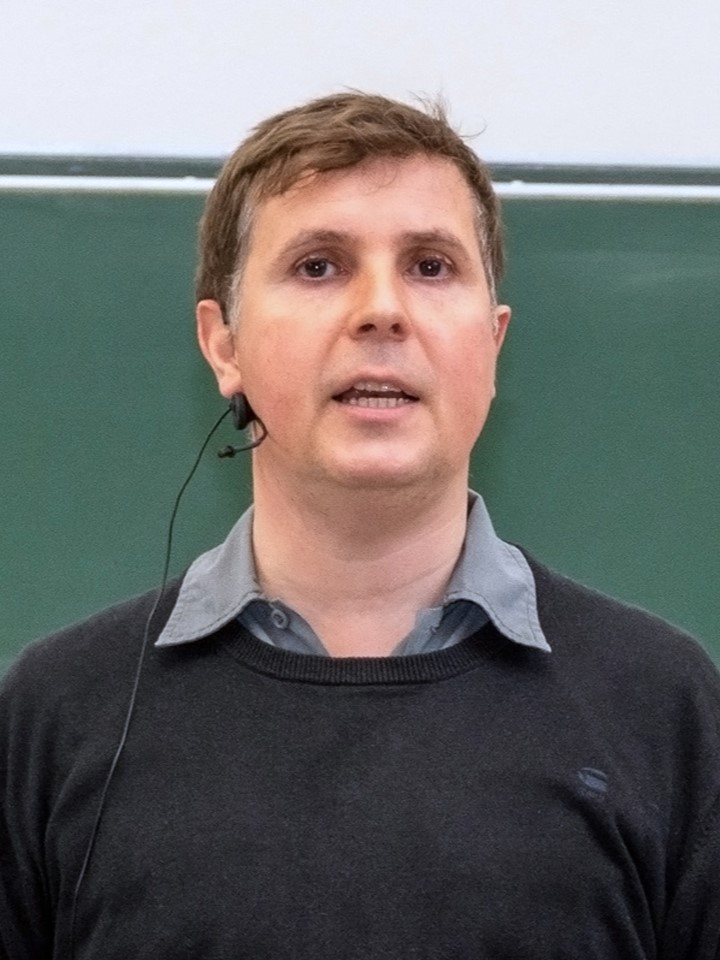
Matthias Naumann
Matthias Naumann is a professor of human geography at the University of Würzburg, Germany. He works on transformations of infrastructure, urban and rural development with a focus on political geographies of authoritarian as well as progressive movements. Recently, Matthias and colleagues published on the neoliberal governance, regional embitterment and the rise of the far right (https://doi.org/10.1080/21622671.2025.2518312 ). Other contributions include collaborative work on ”infrastructural populism” (https://doi.org/10.1111%2Fgec3.12738) and progressive urbanism in small towns (https://doi.org/10.1177/10780874211055834 ).